SEO · Guide
JSON-LD Explained: What It Is and Whether It Helps SEO
JSON-LD is a format for adding structured information to a page. Learn how it describes a business or article, how search engines may use it and how to keep it accurate.
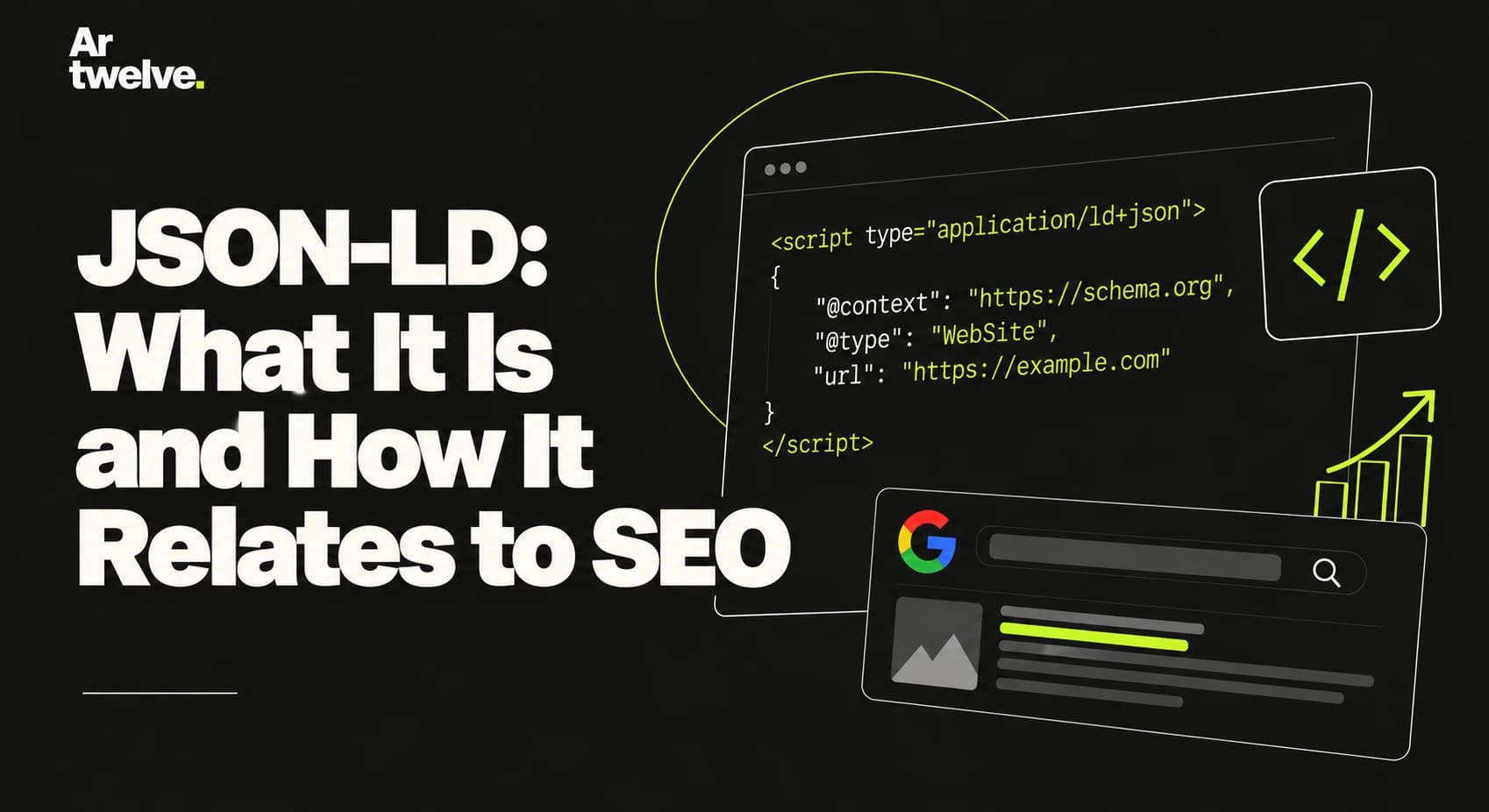
JSON-LD is a way to express structured data in a script block, separate from the visible page markup. It can help search engines interpret entities and page details, but it does not guarantee higher rankings or an enhanced search result.
1. What structured data is
Structured data describes information using a shared vocabulary such as Schema.org. A site might identify an organisation, a website, a breadcrumb trail or an article. JSON-LD is commonly used because the data can be placed in the page without changing its visible layout.
A simple example for a real article can include its headline, description, image and page URL. The values should match what a visitor can see on that page.
2. What it can and cannot do
Structured data gives search engines explicit context about content. For some supported types, valid markup can make a page eligible for a rich result. Eligibility is not a promise: Google decides whether and how to display enhanced features.
JSON-LD is not a shortcut to rankings. It cannot make thin content useful, guarantee indexing, or support claims that are absent from the page. A correct title, helpful content, crawlable links and a technically accessible site still matter.
3. Useful schema types
Organizationfor confirmed details about a company or studio.WebSiteto describe the website itself.BreadcrumbListfor a visible page hierarchy.BlogPostingorArticlefor genuine editorial content.Servicewhen describing a real service in a way that matches its page.
Choose types that fit the actual content. Do not add ratings, reviews, authors, prices or addresses that have not been verified.
4. Implementation and validation
Generate JSON-LD on the server so it is present in the initial HTML. Use absolute canonical URLs and stable identifiers for entities when appropriate. Escape data safely before placing it inside a script element, especially if values come from a CMS.
After deployment, inspect the rendered source and test the markup with Schema.org’s validator. Google’s Rich Results Test checks eligibility for Google’s supported rich results; the tools answer different questions.
Our technical SEO checklist covers structured data alongside the other launch checks.
5. Mistakes to avoid
Common issues include markup that conflicts with visible content, invalid property values, duplicate entities, fake reviews and JSON that contains broken escaping. Keep the data up to date whenever the corresponding page changes.
For a small company website, a few accurate and relevant types are more useful than adding every schema type available.